

Third Trimester Warning Signs: When to Go to the Hospital or See a Gynecologist

In the third trimester (week 28 until delivery), go to a hospital the same day for reduced baby movements, vaginal bleeding, leaking fluid, regular painful contractions before 37 weeks, a severe headache with blurred vision, sudden swelling of the face or hands, severe belly pain, or fever. For everything else, keep every antenatal visit: usually every 2 weeks from week 28 to 36, then every week until delivery. The last three months of pregnancy bring many new sensations, and it is hard to tell which ones are harmless and which are urgent. This guide gives clear answers in plain language, so you and your family can decide quickly and calmly. It is written for expectant mothers and families in Dadri, Surajpur, Tilapta, Sikandrabad, Bulandshahr and nearby villages and towns, where the journey to a hospital can take time. That is why we also explain when to leave home, whom to call, and what to carry. If you are looking for a gynecologist in Dadri for antenatal care and delivery, the later sections will also help you know what good care looks like. Normal or warning sign? A quick comparison Symptom Usually normal when… Go to hospital now when… Belly tightening Irregular, painless, eases with rest, water or a change of position (Braxton Hicks) Regular, painful, getting closer together, or before 37 weeks Baby movements Your baby’s usual pattern continues Movements are clearly less, slower, or you cannot feel them Swelling Mild swelling of feet and ankles by evening Sudden swelling of face, hands or around the eyes, or one swollen painful leg Headache Mild, goes away with rest and fluids Severe or constant, or with blurred vision, flashing lights or upper belly pain Back pain Dull ache from the growing weight Severe, rhythmic pain with belly tightening Vaginal discharge Thin, milky, no bad smell Any bleeding, or a gush or steady trickle of fluid Itching Mild dry skin on the stretching belly Intense itching on palms and soles, worse at night Breathlessness Mild, on climbing stairs, eases with rest Sudden, severe, or with chest pain or fast heartbeat Temperature Normal 100.4°F (38°C) or higher, chills, or burning urine 10 warning signs: go to a hospital immediately Do not wait for your next appointment and do not wait until morning if you notice any of these. 1. Baby is moving less than usual A clear change in your baby’s pattern is one of the most important danger signals in late pregnancy. Do not drink something cold and wait. Get checked the same day, even at night. 2. Vaginal bleeding Any bleeding in the third trimester needs urgent assessment. It can be linked to the placenta lying low (placenta previa) or separating early (placental abruption), which can put both mother and baby at risk. Do not put anything inside the vagina. 3. Water breaking or fluid leaking A gush or steady trickle of watery fluid may mean your membranes have ruptured. Before 37 weeks this is premature rupture of membranes; at term, labour usually follows soon. Either way, go to the hospital and note the time and colour of the fluid. 4. Regular painful contractions before 37 weeks Tightening that becomes stronger, longer and closer together, especially with low back pain or pelvic pressure, may be preterm labour. Early treatment can improve the baby’s outcome. 5. Severe headache with vision changes A headache that does not settle, with blurred vision, flashing lights or spots, can be a sign of preeclampsia, a pregnancy-related blood pressure condition. 6. Sudden swelling of the face, hands or eyes Sudden swelling or a rapid weight gain over a few days, especially with high blood pressure, needs same-day evaluation. 7. Severe or constant belly pain Pain that does not come and go, a hard board-like belly, or pain under the right ribs can point to placental problems or preeclampsia. Treat it as an emergency. 8. Fever, chills or burning urine Infection can trigger early labour. During and after the monsoon, fever in pregnancy also needs quick testing for dengue and malaria, which can be serious in pregnant women. Do not self-treat with painkillers; call your doctor and get checked. 9. A fall, road accident or blow to the belly Even if you feel fine, get checked. Some placental injuries are not obvious at first. This matters on bumpy village roads and two-wheeler journeys, which are best avoided in late pregnancy. 10. Seizure, fainting, chest pain or severe breathlessness These are always emergencies. Call an ambulance immediately (see the emergency numbers section below). Common third trimester symptoms that are usually normal Your baby is gaining weight quickly and your growing uterus presses on nearby organs. These are common and usually harmless, but mention them at your next visit: Braxton Hicks contractions: irregular tightening that eases with rest, water or a change of position Backache and pelvic pressure: from the extra weight and hormones loosening the pelvic joints Mild swelling of feet and ankles, more in hot weather or after long sitting or standing Heartburn and indigestion: the uterus pushes against the stomach Frequent urination: the baby’s head presses on the bladder Breathlessness on stairs: often eases when the baby settles lower near term Leg cramps and poor sleep Itchy, stretching belly skin without a rash More thin, milky vaginal discharge without bad smell or itching A useful rule: normal symptoms are mild, come and go, and improve with rest, fluids or a change of position. A symptom that is severe, sudden, constant, or combined with another warning sign needs a doctor. What to expect from week 28 to delivery Weeks What is happening What to focus on 28 to 32 Rapid growth, stronger kicks, early Braxton Hicks Start a movement routine, glucose and blood count checks if not done, Rh-negative mothers discuss anti-D, plan your hospital and delivery 33 to 36 Baby moves head down for most, more pressure and tiredness Growth scan if advised, blood pressure checks, pack your bag, plan transport, learn labour signs 37 to
Common Gynecological Problems and When to Visit a Gynecologist in Dadri
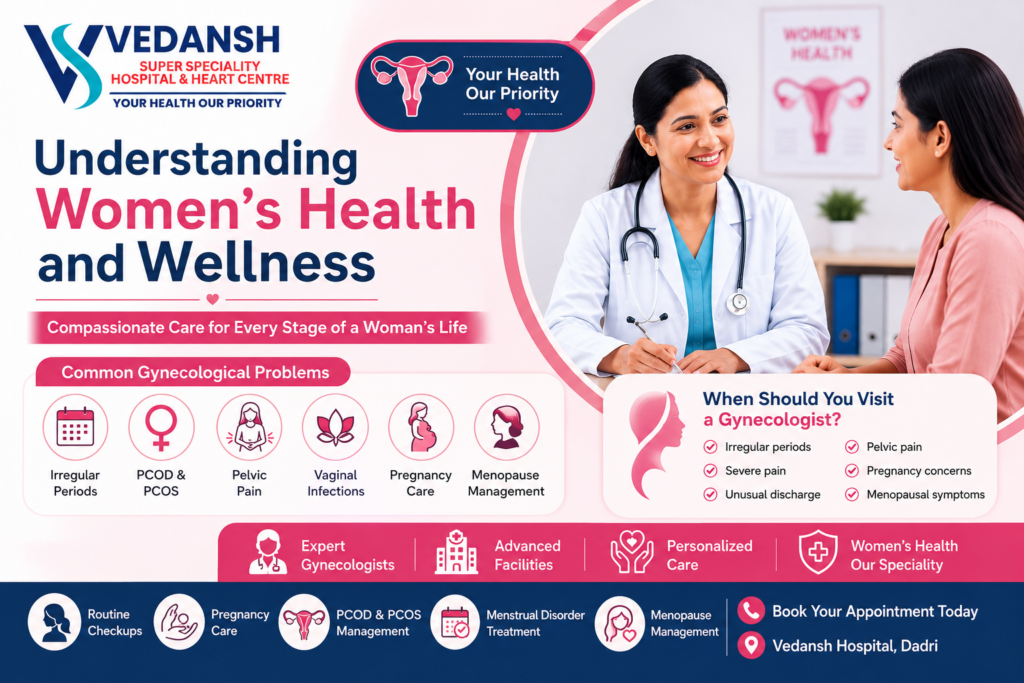
Women’s health requires specialized care at every stage of life—from adolescence and reproductive years to pregnancy and menopause. Regular gynecological checkups play an important role in maintaining overall health, detecting medical conditions early, and ensuring timely treatment. If you are looking for an experienced Gynecologist in Dadri, understanding common gynecological problems can help you know when to seek medical advice. Why Are Regular Gynecological Checkups Important? Routine gynecological examinations help: Monitor reproductive health Detect infections early Manage menstrual disorders Support pregnancy planning Screen for cervical and reproductive health concerns Regular visits allow women to discuss health concerns openly and receive personalized medical guidance. Common Gynecological Problems 1. Irregular Menstrual Cycles Irregular periods are one of the most common reasons women visit a gynecologist. Possible causes include: Hormonal imbalance Stress PCOD/PCOS Thyroid disorders Lifestyle changes Persistent menstrual irregularities should be evaluated by a healthcare professional. 2. PCOD and PCOS Polycystic Ovarian Disease (PCOD) and Polycystic Ovary Syndrome (PCOS) are common hormonal disorders affecting women of reproductive age. Common symptoms include: Irregular periods Weight gain Acne Excess hair growth Difficulty conceiving Early diagnosis and proper treatment can help manage symptoms effectively. 3. Pelvic Pain Pelvic pain may result from: Ovarian cysts Endometriosis Infections Uterine fibroids Persistent pelvic discomfort should not be ignored and requires medical evaluation. 4. Vaginal Infections Women may experience infections due to bacteria, fungi, or other causes. Common symptoms include: Itching Unusual discharge Burning sensation Discomfort during urination Timely treatment can prevent complications and improve comfort. 5. Pregnancy-Related Care Regular pregnancy monitoring is essential for the health of both mother and baby. Pregnancy care includes: Antenatal checkups Ultrasound monitoring Nutritional guidance High-risk pregnancy management Seeking professional Pregnancy Care in Dadri helps ensure a healthy pregnancy journey. 6. Menopause Management Menopause is a natural stage in a woman’s life but may cause symptoms such as: Hot flashes Mood changes Sleep disturbances Hormonal fluctuations Gynecologists can provide guidance and treatment options to manage these symptoms. When Should You Visit a Gynecologist? Consult a gynecologist if you experience: Irregular periods Severe menstrual pain Unusual vaginal discharge Pelvic pain Difficulty conceiving Pregnancy-related concerns Menopausal symptoms Early consultation can prevent complications and support long-term health. Tips for Maintaining Women’s Health Follow these healthy habits: Maintain a Balanced Diet Consume foods rich in: Iron Calcium Protein Vitamins and minerals Exercise Regularly Physical activity helps maintain hormonal balance and overall wellness. Manage Stress Stress can affect menstrual cycles and reproductive health. Schedule Routine Health Checkups Regular screenings and gynecological consultations are essential for preventive healthcare. Why Choose Vedansh Hospital for Gynecology Services in Dadri? Vedansh Hospital offers comprehensive women’s healthcare services, including: Routine gynecological consultations Pregnancy care PCOD and PCOS management Menstrual disorder treatment High-risk pregnancy care Menopause management Our experienced specialists provide compassionate and personalized care tailored to every woman’s health needs. Conclusion Women’s health should never be overlooked. Regular gynecological checkups help detect potential health concerns early and ensure appropriate treatment when needed. If you are searching for a trusted Gynecologist in Dadri or expert Women’s Health Services in Dadri, Vedansh Hospital is committed to providing comprehensive care for women at every stage of life.