
Antimicrobial Resistance (AMR)
“Antimicrobial resistance” or AMR silently turns common infections into killers. After all, projections are offering us a death toll close to that of cancers by 2050. This article is a comprehensive guide to learning about superbugs & everything surrounding them.
Category: Public Health & Safety
Date: February 2026
Reading Time: 8 minutes
Word Count: 1,450 words
Understanding Superbugs and AMR Basics
Antimicrobial resistance, commonly referred to as AMR, may be described as one of the most emerging issues facing global healthcare systems. As a basic definition, AMR is described as a situation in which pathogens such as bacteria, viruses, fungi, and parasites develop a defense against drugs meant to kill them. The drugs, which include antibiotics, antiviral medicines, antifungal agents, and antiparasites, gradually fail to work against diseases, turning a previously curable disease into a life-threatening one.
For example, imagine a very common infection scenario—say, a urinary tract infection (UTI)—which affects millions every year around the world, especially women. Traditionally, a short course of antibiotics such as amoxicillin takes care of the infection within days. However, thanks to superbugs such as multi-drug resistant Escherichia coli (E. coli) strains, patients today are at a loss with chronic infection, damage to the kidneys, or sepsis as a result. How about post-surgical infections such as pneumonia in a hospital-acquired infection or a case of gonorrhea infection that’s now become a worldwide health alert?
Superbugs are not a new phenomenon; their discovery has been a gradual process over the past decades. However, their recent rapid growth over the 21st century is a result of the science of evolutionary biology. Viruses have a short multiplication time, and bacteria can do so every 20 minutes. After exposure to sub-lethal dosages of antimicrobials, such resistant mutant organisms will outgrow and rapidly replicate, which then allows for their transmission among individuals, food, water, and environments. As a result, antimicrobial resistance has been termed a “silent pandemic” as its symptoms are not immediately apparent, albeit deadly.
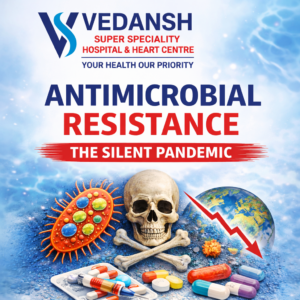
The Alarming Statistics: Superbugs vs. Cancer
To illustrate this, let’s consider some figures. In 2019, bacterial AMR resulted in 1.27 million deaths directly due to AMR, with associated deaths from AMR-complicated infections reaching 4.95 million. Fast forward to 2026 – i.e., 10 years later – and project these figures to 2050. The deaths due to AMR could increase to 10 million annually. This could be double that of present cancer deaths, which hover around 9.6 million annually.
In terms of money, it is staggering. The World Bank projects that AMR will cause a loss in global GDP of 1-3.4% by 2050, translating into a cost in healthcare expenditures, productivity losses, and premature deaths of $1-3.4 trillion annually. The impact on low- and middle-income countries, such as India, is disproportionate, with up to 87% of deaths due to AMR occurring in these countries because of high rates of infections, lack of diagnostic tools, and unrestricted access to antibiotics.
The truth is that unless we address the problem of antibiotic resistance, we are looking at a future where simple bacterial infections like pneumonia may become untreatable. The figures for India are particularly alarming. The country uses 55,000 tonnes of antibiotics every year—far more than any other country. Routine superbugs such as carbapenem-resistant Enterococcus (CRE) and methicillin-resistant Staphylococcus aureus (
Root Causes: Human Habits and Systemic Failures
As can be expected, AMR flourishes with the misuse it receives, and this can happen on
1. Overprescription and Self
Worldwide, it’s estimated that up to 50% of all antibiotics are used unnecessarily. Consumers want a quick cure to infections caused by flu viruses like common colds, flu, and bronchitis, for which antibiotics have no effect. In India, 42% of households use over-the-counter drugs without prescription.
2. Agricultural Overuse: The Hidden Culprit
Livestock breeding consumes 70 percent of the total antibiotics, and farmers use small quantities of antibiotics that are preventive, as a measure of prophylaxis, in a bid to restrict the spreading of diseases in herded animals or speed up their growth, a practice prohibited in the European Union, though prevalent in Asia and the US.
The Hospital & Environmental Spread
Hospital settings breed the problem due to invasive procedures, ventilators, and immunocompromised patients. Poor sanitation at some facilities puts them at particularly high risk of transmission. Wastewater from pharmaceutical manufacturing, such as the 20% of the world’s generics produced in India, dumps active antibiotics into rivers to create resistance “hot labs” where bacteria can evolve willy-nilly.
- Global Travel and Trade
One country detects a resistant strain, and within no time, it spreads to other parts of the world through air travel. The COVID-19 pandemic made things worse as secondary bacterial infections increased and broad-spectrum antibiotics were overtreated.
The Response of India: NAP-AMR 2.0 and Beyond
India has decisively scaled up. Launched in November 2025, the National Action Plan on Antimicrobial Resistance 2.0, NAP-AMR 2025-2029, builds on the framework laid down in 2017 with ambitious targets:
Regulatory Overhaul:
Antibiotics are now classified as Schedule H1, which requires prescriptions with pharmacist control, similar to narcotics.
One Health Approach:
It brings together animal, human, and environmental health sectors. Sales of antibiotics to animals have reduced by 20% through pilot programs, with wastewater standards being tightened.
Surveillance Networks:
Expanded labs monitor resistance patterns in real time, which boosts targeted therapies.
Public Awareness:
“Antibiotics: Use with Care” is highlighted under World Antimicrobial Awareness Week (WAAW)
Clearly, progress is being made because hospital resistance levels for these common bugs have decreased by 10% to 15%. Challenges remain with enforcement at rural pharmacies and farms.
Prevention Strategies: Your Role in the Fight
Individual actions are extremely important. Here’s a practical protocol:
Know When NOT to Use Antibiotics:
Only use antibiotics if the infection is caused by ‘bacteria.’ Do not use for symptoms of a ‘virus’ such as runny nose or cough without fever.
Complete Prescriptions:
Stopping a treatment regimen early enables a survivor to bounce back even stronger. Set phone reminders.
Demand Diagnostics:
Insist on cultures before treatment to identify the infecting agent and its sensitivities.
Food Choices:
Select antibiotic-free products, which are often labeled, and ensure proper washing, especially of fruits and vegetables.
Hygiene Habits:
Wash your hands for 20 seconds, especially after every meal or whenever you have to go to the toilet. Disinfect
Vaccinate:
Flu shots, Pneumonia vaccinations, and HPV help prevent infections, reducing the need for Antibiotics.
Expert Insights on Antibiotic Stewardship
Antibiotic stewardship programs, where antibiotic use is maximized and optimized, are ‘game-changers.’ Hospitals have “time-outs”: checking for a bacterial cause with rapid diagnostic tests such as PCR or MALDI-TOF, using a narrow-spectrum antibiotic, and monitoring within 48-72 hours.
A good example of critical care teams embodying these measures is found at Vedansh Super Speciality Hospital in Dadri: advanced microbiology facilities allow them to identify causative pathogens on the same day, reducing overuse of broad-spectrum agents. In ICU settings, antibiotic de-escalation strategies change broad-spectrum agents to targeted agents once culture results confirm antibiotic susceptibilities, thus sparing “last-resort” agents
Physicians emphasize: Stewardship is not rationing; it’s precision medicine. In fact, by 2026, predictions of resistance patterns will be made possible using AI-powered tools and patient data.
The Path Forward: Innovation and Hope
The solutions are not limited to behavioral factors either. Research pipelines are brimming with promise:
New Antibiotics:
Phage therapy utilizes viruses to fight particular bacteria.
Rapid Diagnostics:
Results are given within hours, not days.
Vaccines and Alternatives:
Probiotics repopulate the gut microbiome after treatment; monoclonal antibodies target resistant bacteria
Governments invest heavily: GARD-P spends $1 billion on R&D in the US, and ICMR spends ₹500 crore on indigenous research for better diagnoses in India.
Why This Matters to You Right Now
The very foundations of medicine, upon which we rely for everyday procedures, surgery, chemotherapy, and C-sections, start to crumble. In India, where 20% of all maternal deaths aredue to infections, we face an existential threat. Yet hope exists through collective vigilance. By making our individual behaviors align with national policies such as NAP-AMR 2.0, we protect the cures of tomorrow. Stay informed and responsible with antibiotic use. Consult an expert with persistent symptoms—your responsibility today secures antibiotics for tomorrow.